
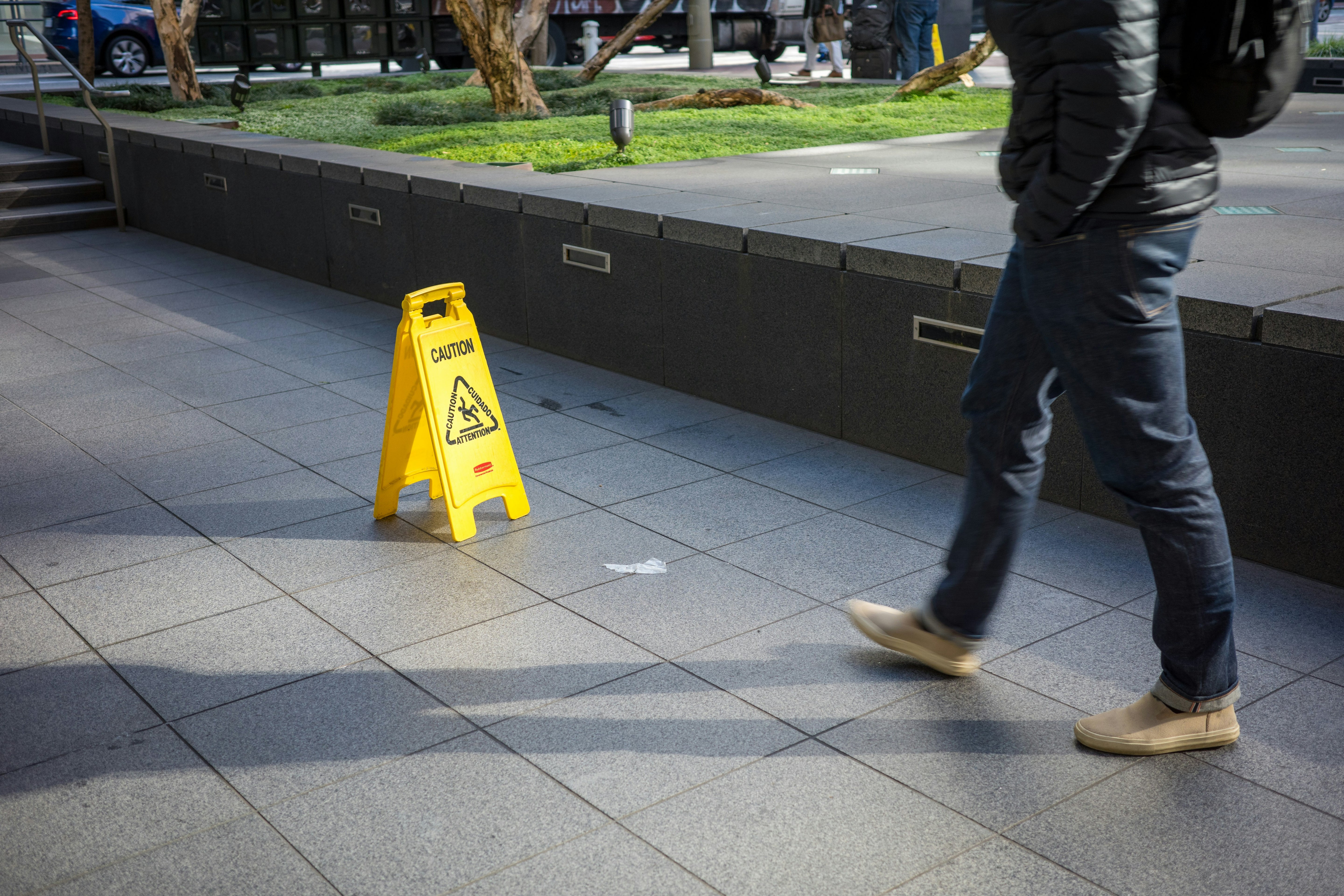
Prohibition Signs
Clearly communicate prohibited activities and help create a safer workplace with high-quality prohibition signs designed for Australian businesses, industrial facilities and construction sites.
Industro supplies a comprehensive range of prohibition safety signs that help prevent unsafe behaviour, restrict unauthorised access and reinforce workplace safety procedures. Whether you operate a warehouse, construction site, manufacturing plant, transport depot, healthcare facility or commercial workplace, prohibition signs provide clear visual instructions about activities that are not permitted.
Our range includes No Smoking signs, No Entry signs, No Mobile Phone signs, No Forklifts signs, No Drinking signs, No Open Flames signs, No Parking signs, No Pedestrians signs and many other workplace prohibition signs.
Available in polypropylene, aluminium composite panel (ACM), metal, self-adhesive vinyl and reflective materials, our prohibition signs are suitable for both indoor and outdoor applications.
Whether you need a single replacement sign or a complete workplace signage package, Industro offers quality products, practical advice and fast Australia-wide delivery.
What Are Prohibition Signs?
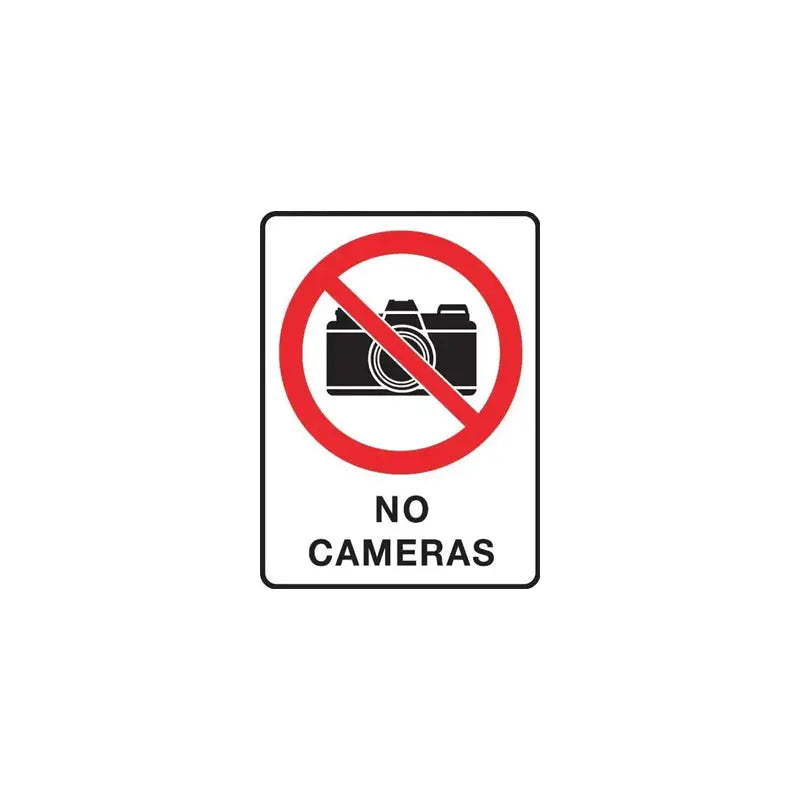
Prohibition signs communicate actions or behaviours that are not allowed.
Unlike warning signs, which alert people to hazards, or mandatory signs, which instruct people to perform a required action, prohibition signs clearly indicate activities that must not occur within a particular area.
They are designed to prevent unsafe behaviour before it creates a hazard.
Prohibition signs are commonly used to:
- Prevent unauthorised access
- Restrict smoking and vaping
- Keep pedestrians away from moving vehicles
- Protect hazardous work areas
- Restrict mobile phone use
- Prevent ignition sources
- Control vehicle movements
- Protect sensitive equipment
- Reinforce workplace policies
- Support site security
By clearly identifying prohibited activities, these signs help reduce confusion and improve workplace safety for employees, contractors and visitors.
Why Prohibition Signs Are Important
Many workplace incidents occur not because people are unaware of hazards, but because they unknowingly carry out activities that should never occur in that location.
Examples include:
- Walking into forklift operating areas
- Entering restricted electrical rooms
- Smoking near flammable materials
- Using mobile phones in hazardous environments
- Bringing food into contamination-controlled areas
- Parking in emergency access zones
Prohibition signs provide immediate visual instructions that help prevent these behaviours before they create unnecessary risks.
Effective prohibition signage helps:
- Improve workplace safety
- Reinforce site rules
- Reduce unauthorised access
- Protect workers and visitors
- Support emergency access
- Improve traffic management
- Assist contractor inductions
- Protect specialised equipment
- Improve compliance with workplace procedures
Understanding Prohibition Sign Colours
Prohibition signs are among the easiest safety signs to recognise because of their distinctive appearance.
Most prohibition signs feature:
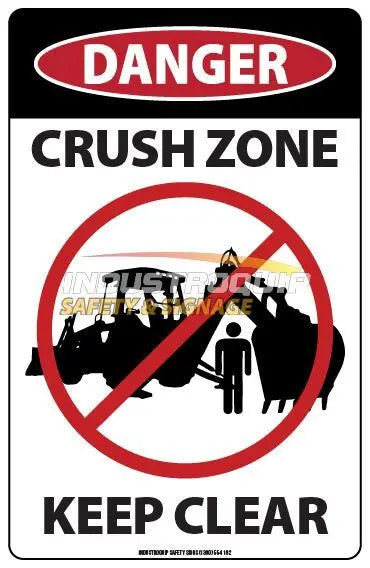
- White background
- Black symbol
- Red circular border
- Red diagonal slash across the symbol
The red circle with the diagonal line immediately communicates "this activity is not permitted."
This internationally recognised design allows workers to understand the instruction quickly, even before reading the supporting wording.
Maintaining consistent colours and symbols across a workplace improves recognition and reduces misunderstanding.
Australian Standards for Prohibition Signs
AS 1319:1994, Safety Signs for the Occupational Environment, remains Australia's recognised standard covering the design and use of occupational safety signs.
Within this framework, prohibition signs communicate actions that are forbidden in order to reduce workplace risks.
Selecting the correct sign category is important.
A prohibition sign should be used where an activity must not occur, while warning, mandatory or danger signs should be used when communicating hazards or required actions.
Some industries, such as healthcare, mining, hazardous chemicals and food manufacturing, may also have additional signage requirements under Work Health and Safety legislation or industry-specific standards.
When Should Prohibition Signs Be Used?
Prohibition signs should be installed wherever a particular behaviour creates unnecessary risk or conflicts with workplace procedures.
Common situations include:
- Smoking restrictions
- Restricted access
- Vehicle control
- Fire safety
- Hazardous chemicals
- Mobile phone restrictions
- Food safety
- Electrical hazards
- Machinery operation
- Pedestrian exclusion zones
Signs should be positioned before people enter the affected area so they have sufficient opportunity to comply.
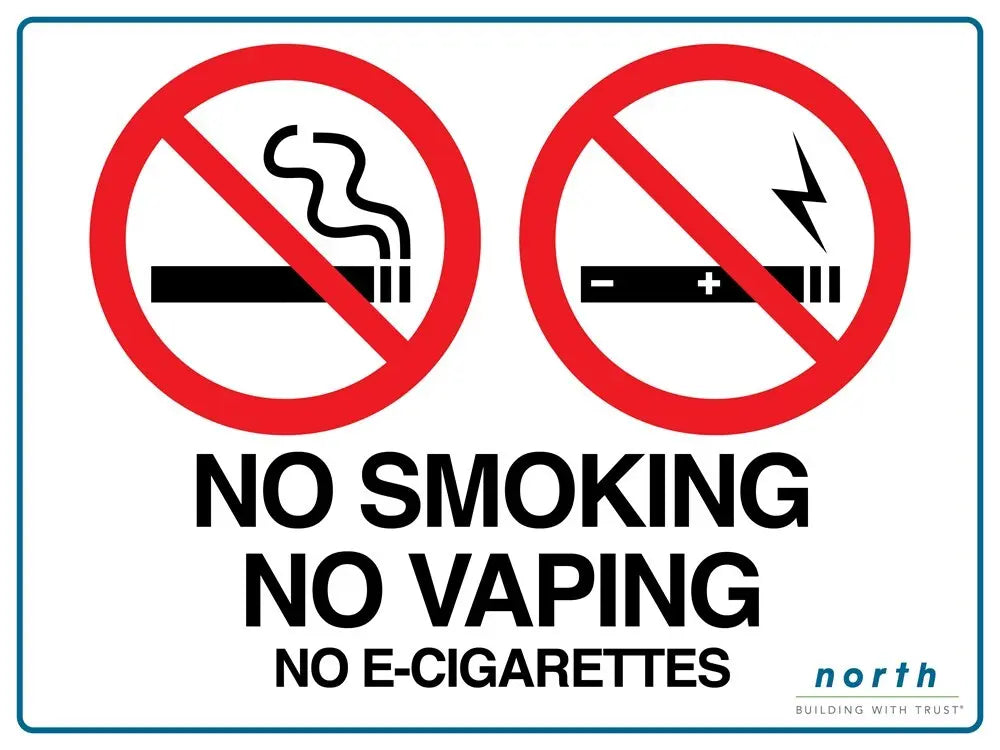
No Smoking Signs
No Smoking signs are among the most widely recognised prohibition signs.
They help eliminate ignition sources and protect people, property and hazardous materials.
Common No Smoking signs include:
- No Smoking
- Strictly No Smoking
- No Smoking Beyond This Point
- Smoking Prohibited
- No Smoking Including E-Cigarettes
- No Smoking or Vaping
Typical applications include:
- Fuel storage
- Chemical storage
- Warehouses
- Construction sites
- Manufacturing facilities
- Hospitals
- Schools
- Public buildings
- Loading docks
- Workshops
No Smoking signs are often installed alongside No Open Flames signs where flammable substances are present.
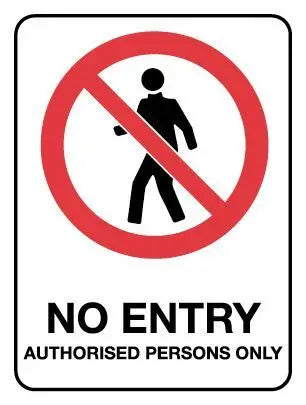
No Entry Signs
No Entry signs prevent unauthorised access to restricted or hazardous areas.
Common examples include:
- No Entry
- Authorised Personnel Only
- No Unauthorised Entry
- Restricted Area
- Staff Only
- Visitors Report to Reception
- Access Prohibited
- Keep Out
Typical locations include:
- Electrical rooms
- Plant rooms
- Construction sites
- Warehouses
- Roof access points
- Service corridors
- Confined spaces
- Chemical storage areas
- Loading docks
These signs should be installed at entrances before people can access the restricted area.

No Forklifts Signs
Some workplace areas should remain free from forklift traffic.
Examples include:
- Pedestrian walkways
- Office areas
- Lunchrooms
- Emergency exits
- First aid rooms
- Amenities
- Public access areas
Typical signs include:
- No Forklifts
- Forklift Access Prohibited
- No Powered Industrial Trucks
- Forklift Exclusion Zone
- Pedestrian Area Only
No Forklifts signs help reinforce warehouse traffic management and reduce interactions between pedestrians and vehicles.
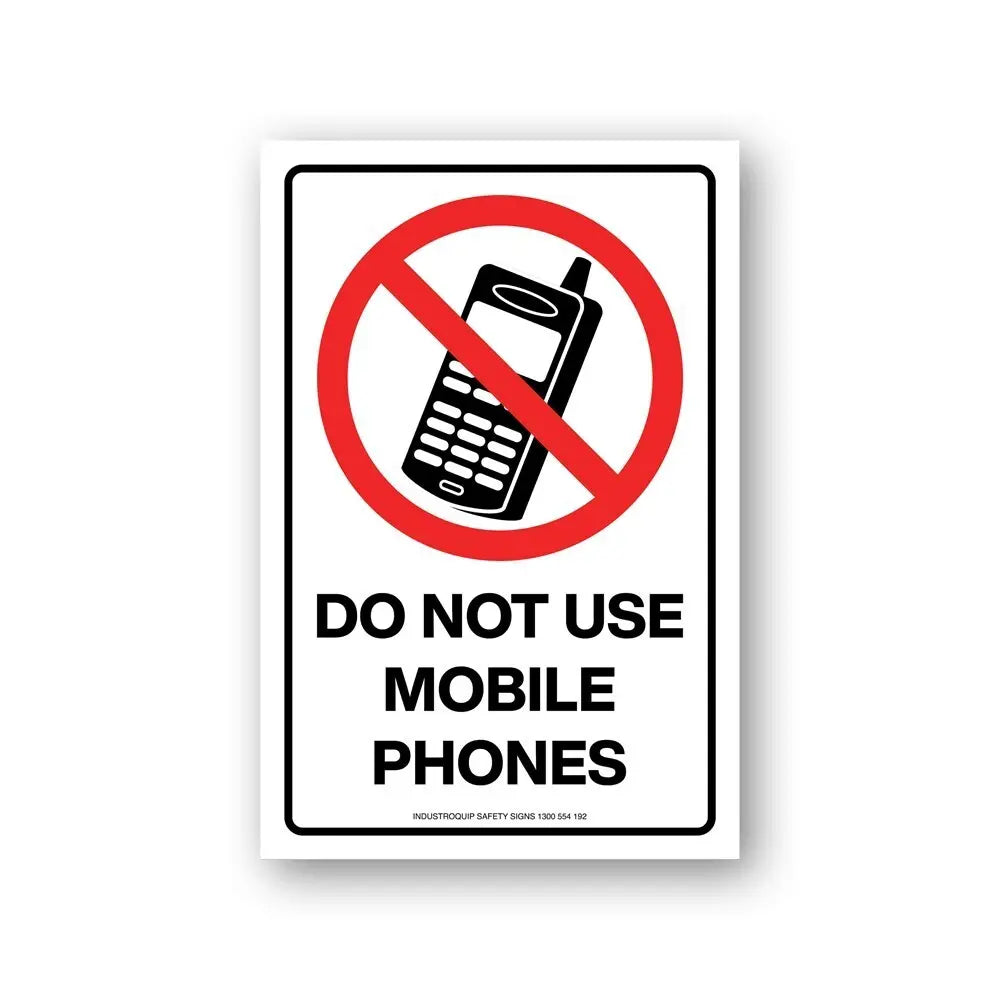
No Mobile Phone Signs
Mobile phones can create distractions and, in certain environments, introduce additional hazards.
Common applications include:
- Fuel storage
- Explosive atmospheres
- Laboratories
- Manufacturing plants
- Sensitive electronic equipment
- Hospitals
- Security areas
- Examination rooms
- Data centres
Typical signs include:
- No Mobile Phones
- Mobile Phones Prohibited
- Switch Off Mobile Phones
- No Electronic Devices
Where appropriate, supporting information can explain the reason for the restriction.

No Drinking Signs
No Drinking signs help protect hygiene standards and prevent contamination.
They are commonly used in:
- Laboratories
- Chemical storage
- Manufacturing
- Food production
- Pharmaceutical facilities
- Warehouses
- Waste handling
- Water treatment plants
Typical wording includes:
- No Drinking
- Drinking Water Not Available
- Do Not Drink
- No Food or Drink
- Consumption Prohibited
These signs are particularly important where substances unsuitable for human consumption may be present.
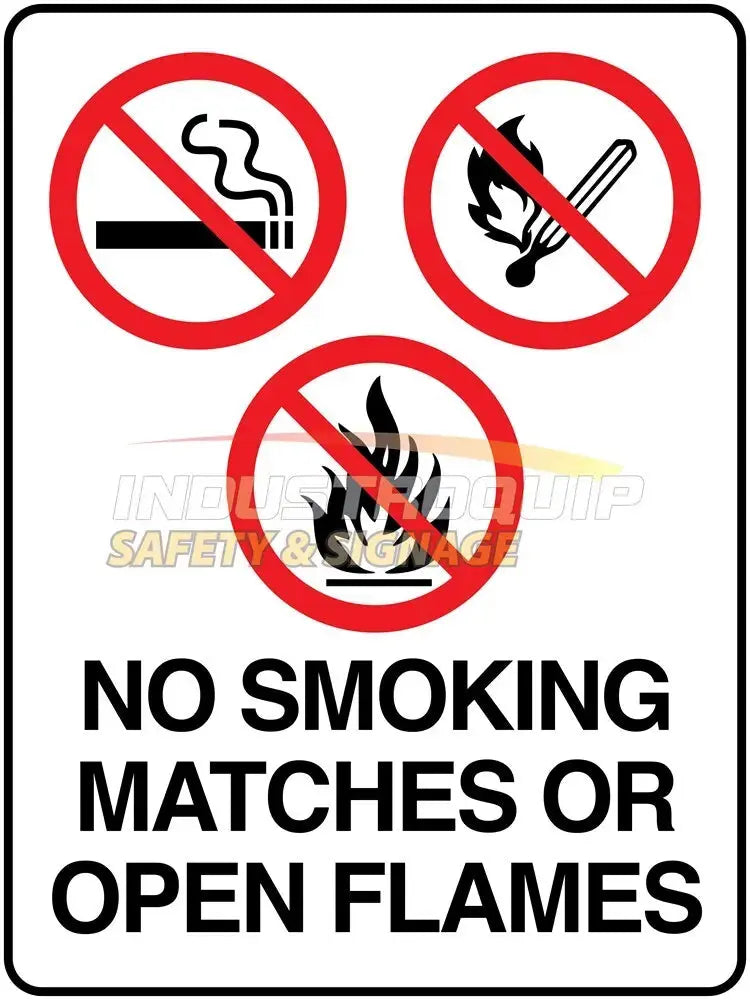
No Open Flames Signs
Open flames present significant ignition risks around flammable substances.
Common signs include:
- No Open Flames
- Naked Flames Prohibited
- No Ignition Sources
- Keep Fire Away
- Hot Work Prohibited
Applications include:
- Fuel storage
- Chemical storage
- Gas cylinder storage
- Battery charging
- Paint storage
- Explosive atmospheres

No Pedestrian Signs
Where moving vehicles or machinery operate, pedestrian access may need to be restricted.
Typical signs include:
- No Pedestrians
- Pedestrian Access Prohibited
- Authorised Personnel Only
- Vehicle Operating Area
- Pedestrian Exclusion Zone
Common applications include:
- Loading docks
- Forklift routes
- Distribution centres
- Container yards
- Manufacturing plants
- Mining operations
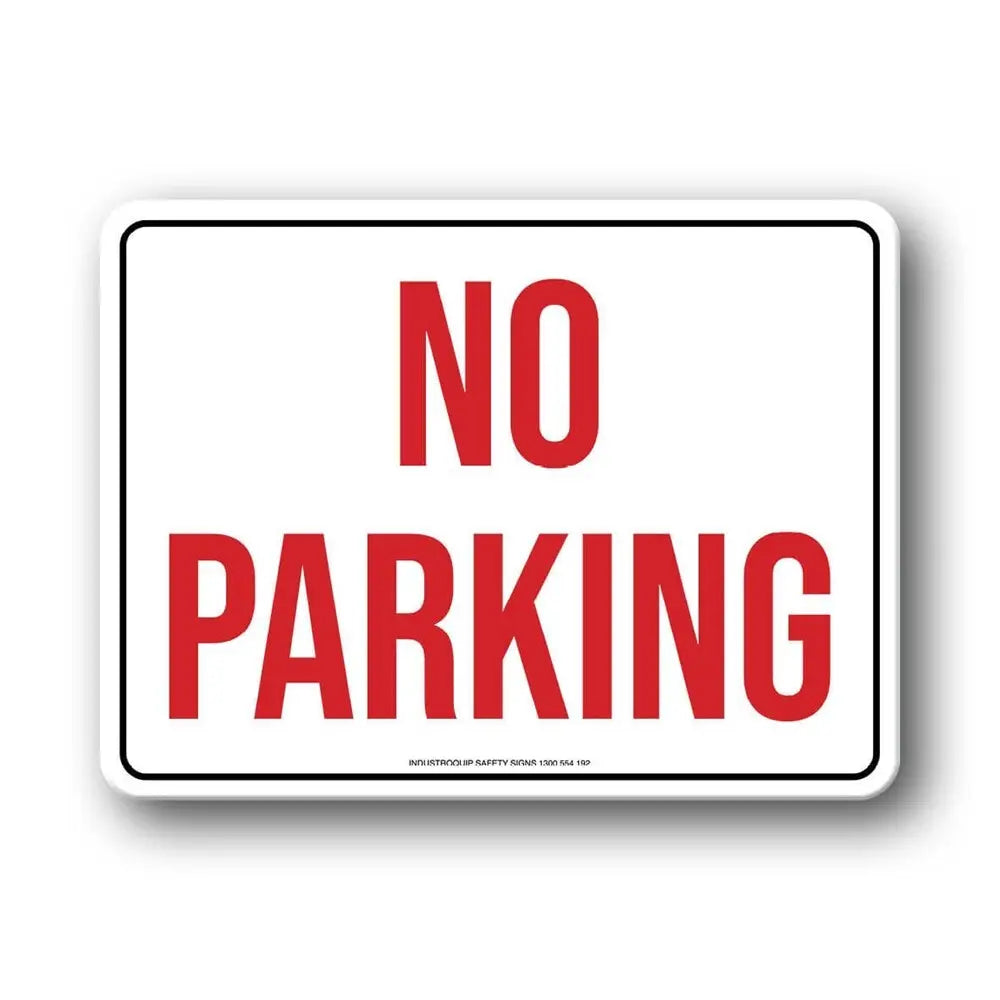
No Parking Signs
No Parking signs help maintain access to critical areas.
Typical locations include:
- Emergency exits
- Fire hydrants
- Loading docks
- Delivery areas
- Ambulance access
- Disabled access zones
- Plant rooms
Examples include:
- No Parking
- Keep Clear
- Fire Access Keep Clear
- Emergency Vehicle Access
- Loading Zone No Parking
Choosing the Right Material
Prohibition signs are available in:
- Polypropylene
- Aluminium Composite Panel
- Metal
- Self-Adhesive Vinyl
- Reflective Materials
Material selection depends on:
- Indoor or outdoor installation
- Mounting surface
- Exposure to weather
- Viewing distance
- Expected service life
Long-term outdoor installations generally benefit from aluminium composite or metal construction, while self-adhesive vinyl is ideal for machinery, doors and equipment.
Where Should Prohibition Signs Be Installed?
Prohibition signs should be installed before the prohibited activity could occur.
Common locations include:
- Entry gates
- Doorways
- Warehouse aisles
- Loading docks
- Electrical rooms
- Chemical storage
- Fuel storage
- Machinery
- Walkways
- Car parks
Positioning the sign before the decision point gives people the opportunity to comply before entering the restricted area.
Common Mistakes
Some common mistakes include:
- Installing signs after the restricted area
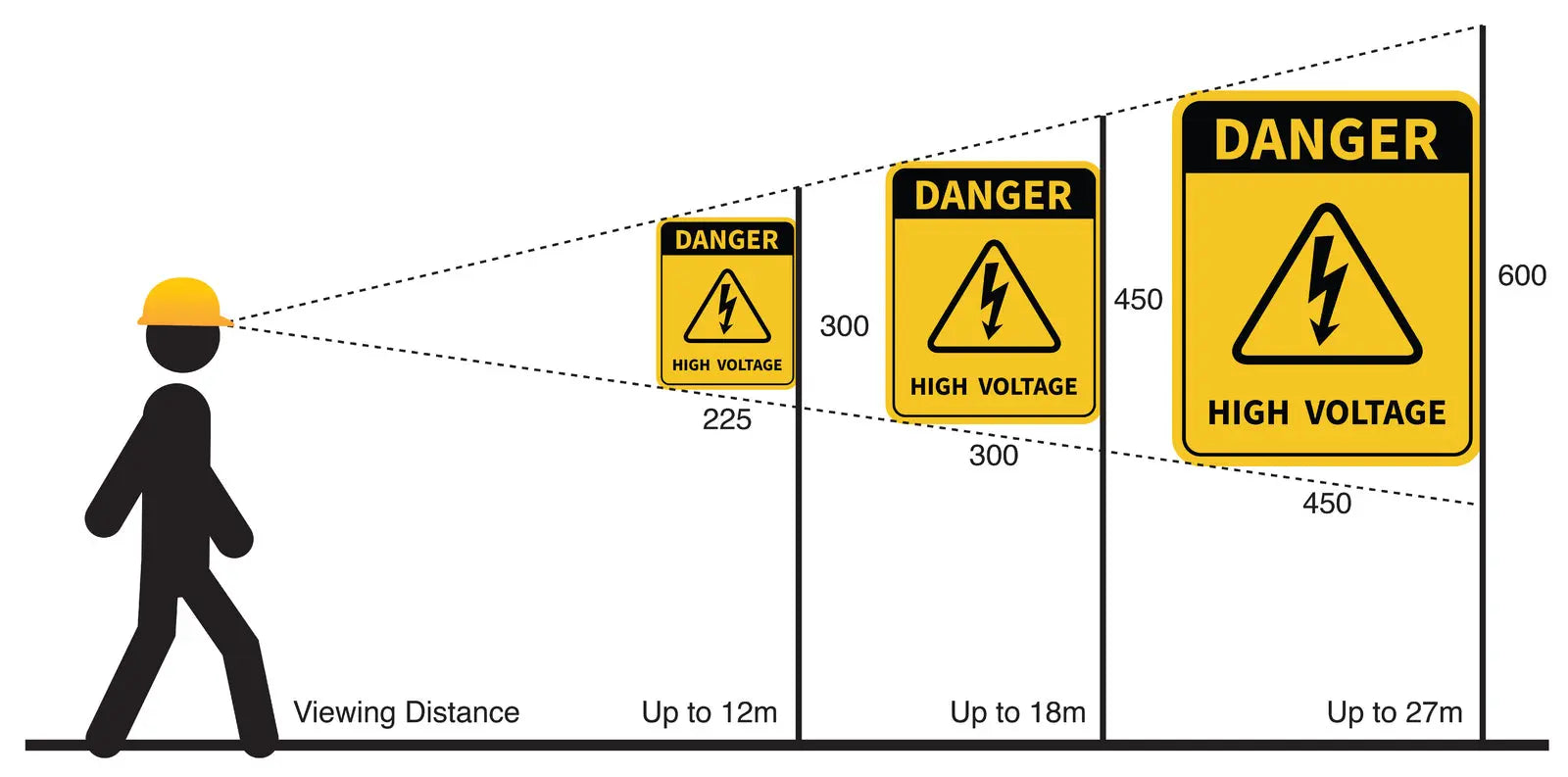
- Choosing signs that are too small
- Allowing signs to become faded
- Obstructing signs with equipment or stock
- Using prohibition signs where warning signs are more appropriate
- Leaving outdated signs in place
- Displaying too many signs together, reducing readability
Routine workplace inspections should include reviewing signage to ensure it remains accurate, visible and relevant.
Frequently Asked Questions
A prohibition sign communicates an activity that is not permitted within a particular area. It helps prevent unsafe behaviour by clearly indicating actions that must not occur, such as smoking, entering restricted areas or using mobile phones.
Prohibition signs typically feature a white background, a black symbol and a red circular border with a diagonal red slash. This distinctive design immediately indicates that the activity shown is prohibited.
A prohibition sign tells people what they must not do, while a mandatory sign tells people what they must do.
For example:
- Prohibition: No Smoking
- Mandatory: Eye Protection Must Be Worn
AS 1319:1994, Safety Signs for the Occupational Environment, provides guidance on the design and use of occupational safety signs, including prohibition signs.
Prohibition signs should be positioned before a person reaches the point where the prohibited activity could occur, such as at entrances, gates, restricted areas, loading docks, electrical rooms or hazardous work zones.
Yes. Industro can manufacture custom prohibition signs with site-specific wording, company logos, QR codes, multiple languages, custom sizes and project-specific information while maintaining recognised prohibition sign conventions.
For permanent outdoor applications, aluminium composite and metal signs provide excellent durability. Corflute is suitable for temporary applications, while self-adhesive vinyl is ideal for smooth surfaces such as machinery, doors and equipment.
The correct size depends on viewing distance, installation height, available mounting space and whether people are walking or driving. Larger signs are generally recommended for entrances, vehicle routes and outdoor applications.
Yes. Recognised symbols help communicate prohibited activities quickly and effectively, particularly where workers or visitors speak different languages. Symbols are typically supported by clear text for maximum understanding.
Industro supplies high-quality prohibition safety signs for Australian workplaces, with durable materials, multiple sizes, custom manufacturing and Australia-wide delivery. Whether you need a single sign or a complete workplace signage solution, our team can help you select the right products for your application.
Order Prohibition Signs from Industro
Clearly communicate prohibited activities and help create a safer workplace with premium prohibition signs from Industro.
Browse our range of No Smoking, No Entry, No Forklifts, No Mobile Phones, No Drinking and other workplace prohibition signs, or contact our team for custom signage tailored to your facility.
Whether you require one replacement sign or a complete site-wide signage package, Industro provides durable products, practical advice and fast Australia-wide delivery.