
Emergency Information Signs
Help people respond quickly during emergencies with high-quality emergency information signs designed for Australian workplaces.
Industro supplies a comprehensive range of emergency signs that clearly identify emergency exits, assembly points, first aid equipment, automated external defibrillators (AEDs), fire equipment and other critical emergency facilities. Whether you manage a warehouse, construction site, office, manufacturing plant, healthcare facility, school or public building, emergency signage plays an essential role in helping occupants locate safety equipment and evacuation routes when every second counts.
Our range includes emergency exit signs, first aid signs, AED signs, emergency assembly point signs, fire equipment identification signs, emergency shower signs, eyewash station signs and custom emergency information signs.
Available in polypropylene, aluminium composite panel (ACM), metal, self-adhesive vinyl, reflective and photoluminescent materials, our emergency signs are suitable for indoor and outdoor applications across a wide range of industries.
Whether you need a single replacement sign or a complete emergency signage package, Industro provides quality products, practical advice and fast Australia-wide delivery.
What Are Emergency Information Signs?
Emergency information signs identify equipment, facilities, routes and locations that people may need during an emergency.
Unlike warning, danger or prohibition signs, emergency signs provide positive guidance, helping people find safety rather than avoid hazards.
During emergencies, people often have very limited time to make decisions. Clear emergency signage helps reduce confusion by directing occupants towards exits, first aid equipment, emergency assembly areas and firefighting equipment.
Emergency information signs commonly identify:
- Emergency exits
- Assembly points
- First aid kits
- First aid rooms
- AEDs
- Fire extinguishers
- Fire hose reels
- Fire blankets
- Emergency showers
- Eyewash stations
- Emergency telephones
- Stretchers
- Rescue equipment
- Evacuation routes
Well-designed emergency signage supports emergency planning and helps improve workplace preparedness.
Why Emergency Signs Are Important
Emergencies can occur without warning.
Fire, medical emergencies, chemical spills, electrical incidents and natural disasters often require people to locate emergency facilities quickly.
During stressful situations, people rarely have time to search for equipment.
Emergency information signs provide immediate visual guidance that helps occupants locate essential safety equipment and follow evacuation routes.
Effective emergency signage helps:
- Improve emergency response
- Reduce evacuation times
- Assist visitors unfamiliar with the building
- Identify life-saving equipment
- Reinforce emergency procedures
- Support emergency planning
- Improve workplace organisation
- Help emergency services locate equipment
- Improve confidence during emergencies
Emergency signs should always form part of a broader emergency management system that includes emergency procedures, staff training, drills and regular equipment inspections.
Understanding Emergency Sign Colours
Emergency information signs use a distinctive colour scheme that makes them easy to recognise.
Most emergency signs feature:
- Green background
- White symbol
- White text
Green has become internationally recognised as the colour associated with safety and emergency assistance.
Unlike danger signs, which communicate hazards, emergency signs reassure people by directing them towards assistance or safe escape routes.
Maintaining consistent colours throughout a workplace improves recognition and helps occupants make faster decisions during emergencies.
Emergency Signs and Australian Standards
AS 1319:1994, Safety Signs for the Occupational Environment, recognises emergency information signs as a distinct category of workplace safety signage.
Emergency signs are intended to identify emergency-related equipment, facilities and safe egress routes.
Additional requirements may apply under the National Construction Code (NCC), Australian Standards relating to emergency lighting and exit signs, fire safety legislation and workplace health and safety regulations.
Businesses should ensure emergency signage reflects the actual emergency arrangements for their facility and is reviewed whenever layouts, exits or equipment locations change.
Emergency Exit Signs
Emergency exit signs help occupants locate the safest route out of a building during an evacuation.
These signs should remain clearly visible under normal operating conditions and, where required, during power failures through illuminated or emergency-lit systems.
Common emergency exit signs include:
- Emergency Exit
- Exit
- Fire Exit
- Exit Left
- Exit Right
- Exit Straight Ahead
- Emergency Escape Route
- Final Exit
- Stair Exit
- Refuge Area
Emergency exit signs are commonly installed:
- Above exit doors
- Along evacuation routes
- Stairwells
- Corridors
- Warehouses
- Shopping centres
- Office buildings
- Schools
- Hospitals
- Public buildings
Signs should provide continuous guidance from occupied areas to the final point of safety.
Buy Emergency Exit SignsEmergency Assembly Point Signs
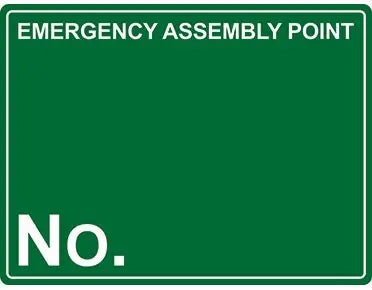
After evacuating a building, occupants need to gather at a designated location where emergency services or workplace wardens can account for everyone.
Assembly point signs identify these locations clearly.
Typical signs include:
- Emergency Assembly Point
- Muster Point
- Assembly Area
- Emergency Meeting Point
- Evacuation Assembly Point
Assembly points are commonly located:
- Car parks
- Open spaces
- Sporting fields
- Building forecourts
- Construction sites
- Industrial facilities
- Mining operations
Assembly areas should be positioned away from the immediate hazard while remaining easily accessible.
Signs should be visible from multiple directions to assist people unfamiliar with the site.
Buy Emergency Assembly Point Signs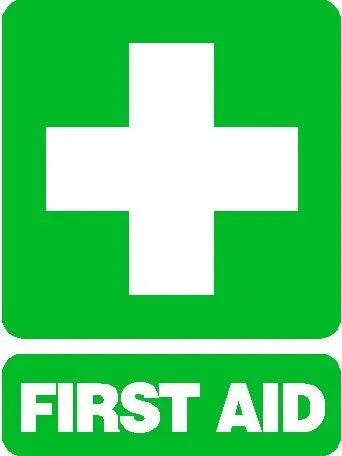
First Aid Signs
First aid signs help workers and visitors quickly locate medical assistance.
During an emergency, delays in finding first aid equipment can significantly affect outcomes.
Common first aid signs include:
- First Aid
- First Aid Kit
- First Aid Room
- First Aid Officer
- Medical Room
- Medical Assistance
Typical applications include:
- Warehouses
- Construction sites
- Offices
- Manufacturing facilities
- Schools
- Hospitals
- Sports centres
- Retail facilities
First aid signs should remain visible even if equipment is temporarily relocated during renovations or maintenance.
Buy First Aid Signs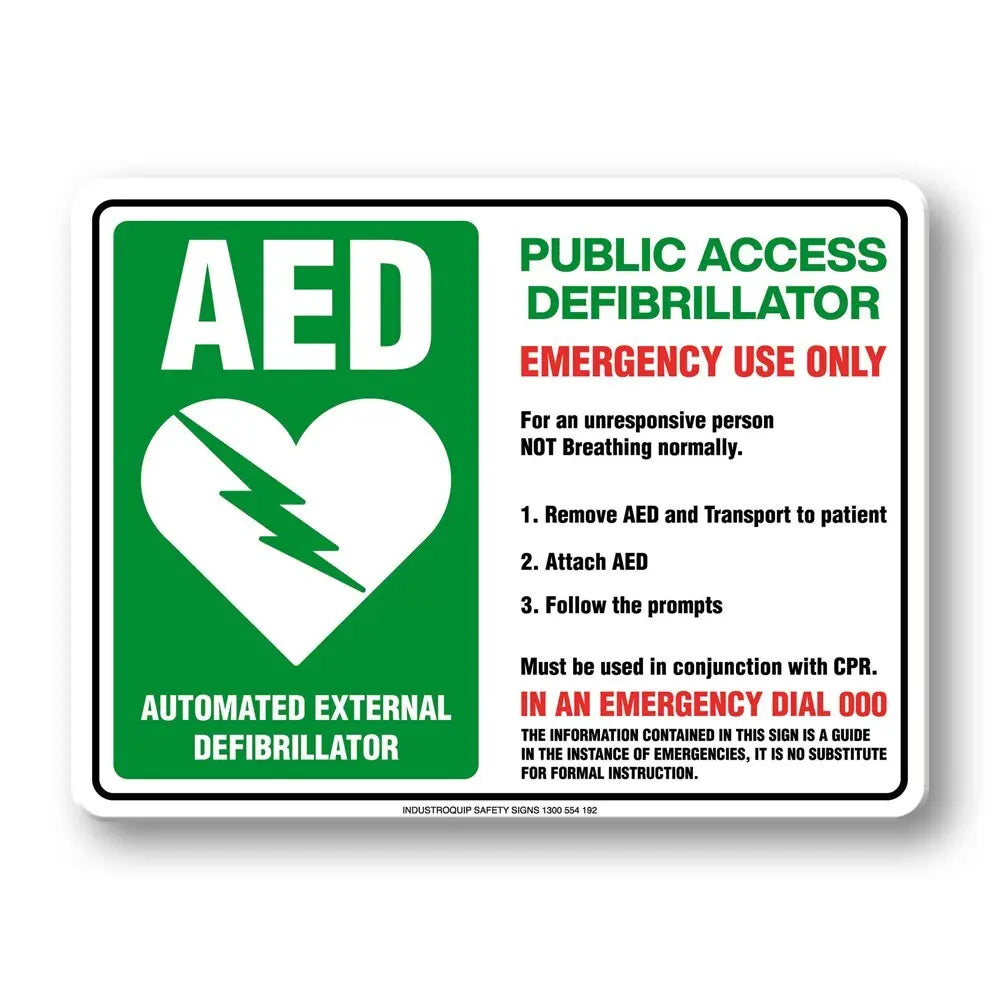
AED Signs
Automated External Defibrillators (AEDs) have become increasingly common throughout Australian workplaces and public facilities.
An AED sign helps ensure the device can be located quickly during a cardiac emergency.
Typical signs include:
- AED
- Automated External Defibrillator
- Defibrillator Located Here
- AED Directional Arrow
AED signs are commonly installed:
- Office buildings
- Shopping centres
- Sporting facilities
- Schools
- Warehouses
- Airports
- Community centres
- Healthcare facilities
Where the AED is not immediately visible, directional signs should guide occupants from nearby circulation areas.
Buy AED Signs
Fire Equipment Signs
Fire equipment signs identify the location of equipment used to respond to small fires during the early stages of an emergency.
Common fire equipment signs include:
- Fire Extinguisher
- Fire Hose Reel
- Fire Blanket
- Fire Hydrant
- Fire Alarm
- Fire Indicator Panel
- Fire Control Room
- Booster Connection
- Fire Equipment Keep Clear
These signs should remain visible and unobstructed by shelving, pallets, parked vehicles or stored goods.
Fire equipment signs should not be confused with prohibition signs such as "No Smoking" or mandatory signs requiring specific actions.
Buy Fire Equipment Signs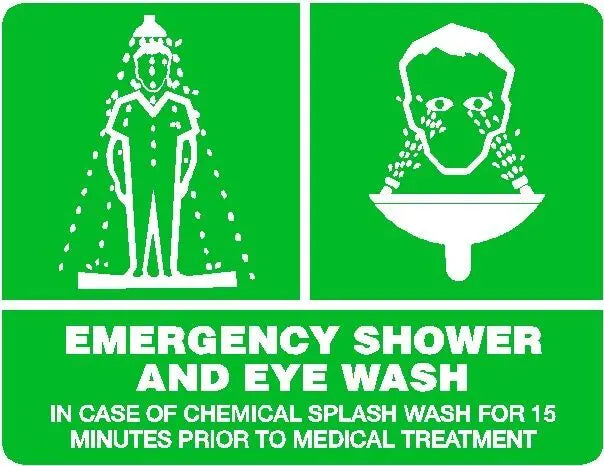
Emergency Shower and Eyewash Signs
Some workplaces handle hazardous chemicals or substances that require immediate decontamination following exposure.
Emergency shower and eyewash signs identify these important facilities.
Common signs include:
- Emergency Shower
- Eyewash Station
- Emergency Eye Wash
- Safety Shower
- Combination Shower and Eyewash
Typical locations include:
- Laboratories
- Chemical storage
- Manufacturing plants
- Water treatment facilities
- Mining
- Industrial processing
- Research facilities
These signs should remain clearly visible from surrounding work areas.
Buy Emergency Shower and Eyewash Signs
Emergency Telephone Signs
Emergency telephones provide direct communication during incidents.
Typical signs include:
- Emergency Telephone
- Emergency Communications
- Emergency Call Point
- Emergency Contact Phone
These are commonly used in:
- Industrial facilities
- Tunnels
- Car parks
- Universities
- Hospitals
- Mining
- Utilities

Rescue Equipment Signs
Some workplaces require specialist rescue equipment.
Common rescue signs include:
- Rescue Equipment
- Rescue Kit
- Rescue Harness
- Stretcher
- Confined Space Rescue Equipment
Applications include:
- Confined spaces
- Working at heights
- Utilities
- Mining
- Emergency response facilities
Choosing the Right Material
Emergency signs are available in:
- Polypropylene
- Aluminium Composite Panel
- Metal
- Self-Adhesive Vinyl
- Reflective Materials
- Photoluminescent Materials
Photoluminescent signs absorb ambient light and glow in darkness, making them particularly valuable where emergency visibility is important.
Material selection should consider:
- Indoor or outdoor installation
- Mounting surface
- Viewing distance
- Expected service life
- Lighting conditions
- Exposure to weather
Where Should Emergency Signs Be Installed?
Emergency signs should be positioned where occupants naturally look when seeking assistance.
Typical locations include:
- Above emergency exits
- Along evacuation routes
- Above first aid equipment
- Beside fire equipment
- Above AED cabinets
- At assembly areas
- Near emergency showers
- Along corridors
- Warehouse aisles
- Construction site amenities
Signs should remain visible at all times and should never be blocked by shelving, machinery or stored materials.
Common Mistakes
Some common emergency signage mistakes include:
- Blocking emergency signs with stock or equipment
- Failing to update signs when equipment is relocated
- Poor lighting
- Installing signs too low
- Choosing signs that are too small
- Missing directional signs
- Inconsistent emergency signage
- Damaged or faded signs
Regular inspections should include checking that emergency signs remain visible, legible and correctly positioned.
Frequently Asked Questions About Emergency Signs
An emergency information sign identifies equipment, facilities or routes used during an emergency, such as emergency exits, first aid kits, assembly points or fire equipment. These signs help people quickly locate assistance or safely evacuate a workplace.
Emergency information signs typically feature a green background with white symbols and text. Green is internationally recognised as the colour associated with safety, emergency assistance and safe escape routes.
Emergency signs identify locations such as emergency exits, first aid kits, assembly points and AEDs. Fire equipment signs specifically identify firefighting equipment, including fire extinguishers, hose reels, hydrants and alarms. Together, they help people locate essential emergency resources quickly.
AS 1319:1994, Safety Signs for the Occupational Environment, provides guidance on emergency information signs used in workplaces. Depending on the building type and application, additional requirements may apply under the National Construction Code, fire safety legislation and other relevant Australian Standards.
Emergency signs should be installed where they can be easily seen before equipment or exits need to be used. Common locations include above exit doors, beside first aid kits, above AED cabinets, along evacuation routes and at emergency assembly areas.
Yes. Industro can manufacture custom emergency information signs with site-specific wording, company logos, directional arrows, multilingual text, QR codes and custom sizes while maintaining recognised emergency signage conventions.
Aluminium composite and metal are excellent choices for long-term outdoor installations due to their durability and weather resistance. Reflective materials improve visibility in low-light conditions, while photoluminescent signs are ideal where visibility during power outages is important.
The appropriate size depends on viewing distance, mounting location and the importance of the information. Larger signs are generally recommended for warehouses, public buildings and large industrial sites, while smaller signs may be suitable for doors, cabinets and equipment.
Yes. Recognised symbols help communicate information quickly and effectively, especially in emergencies where people may not have time to read lengthy text. Combining symbols with clear wording provides the best level of communication.
Industro supplies a comprehensive range of emergency signs for Australian workplaces, including emergency exits, first aid, AEDs, assembly points and fire equipment signage. With durable materials, multiple sizes, custom manufacturing and Australia-wide delivery, we help businesses create safer workplaces that are prepared for emergencies.
Order Emergency Information Signs from Industro
Ensure your workplace is prepared for emergencies with high-quality emergency information signs from Industro.
Browse our range of emergency exit signs, assembly point signs, first aid signs, AED signs and fire equipment signs, or contact our team for custom emergency signage tailored to your facility.
Whether you require one replacement sign or a complete emergency signage solution, Industro provides durable products, practical advice and fast Australia-wide delivery.